League of Legends History: From 2009 Launch to Today
How League of Legends grew from a 2009 free-to-play launch into a long-running MOBA, with its map overhauls, item systems, spin-offs and Arcane.

When League of Legends launched in October 2009, it was a small free-to-play game from a young studio, entering a genre that still mostly lived inside a Warcraft III custom map. More than fifteen years later it is one of the most played PC games in the world, with a roster of over 170 champions, a family of spin-off games and an Emmy-winning animated series. This article follows that story through its design milestones: how the game was born, how Summoner’s Rift and its systems changed, and how the League universe expanded beyond the original game. Esports and business history are left aside to focus on the game itself.
Riot Games and the Origins of League
Riot Games was founded in September 2006 in Santa Monica, California, by Brandon Beck and Marc Merrill. Both were fans of Defense of the Ancients, the Warcraft III custom map that had become hugely popular in the mid-2000s, and they wanted to build a standalone game in that style with the kind of ongoing support a commercial studio could provide.
The first person Riot recruited was Steve Feak, known in the DotA community as Guinsoo, who had been one of the main developers of DotA Allstars. His experience with the map’s design shaped many of League’s early ideas. For the wider story of how DotA itself developed, see our history of the MOBA genre.
According to Wikipedia’s history of the game, an early prototype built in the Warcraft III engine was shown at the Game Developers Conference in 2007, and League of Legends was formally announced on October 7, 2008. Closed beta testing began in April 2009 with 17 champions.
The 2009 Launch and Early Design Choices
League of Legends launched in North America on October 27, 2009. Riot had planned a roster of 20 champions at release and ended up doubling that figure, launching with 40.
From the start, League differed from DotA in deliberate ways:
- Free-to-play. The game cost nothing to download and play, with revenue coming from optional purchases. That model was unusual for a Western PC game at the time and became central to League’s growth.
- Simplified laning. There was no denying, no courier and no hero turn rate. Players returned to base to shop.
- Summoner identity. Players took the role of “summoners” with persistent account levels, summoner spells, runes and masteries that carried across games.
- Constant updates. Riot released new champions frequently. In 2014 it settled into a regular patch rhythm of roughly every two to three weeks, which continues to shape how League evolves.
A macOS version followed in March 2013. The story layer changed too: in September 2014 Riot rebooted the game’s lore, dropping the in-universe concept of summoners and building out the world of Runeterra, which would later support the spin-offs and Arcane.
Reworking Summoner’s Rift
The map itself has changed far more than many players realize. Some of the most important milestones:
| Period | Change |
|---|---|
| 2012 | A graphical and technical update improved performance and textures. |
| November 2014 | Summoner’s Rift was rebuilt from scratch with a new art style and clearer gameplay readability; it replaced the old map in all queues on November 19, 2014. |
| Late 2015 – 2016 | The Rift Herald was added on the top side, and the single Dragon was replaced by elemental drakes with different buffs. |
| Late 2019 | Dragon souls and the Elemental Rift were introduced, so the drake type now changes the map terrain and grants a powerful soul buff to the first team to collect enough drakes. |
| 2024 | Voidgrubs were added as an early siege objective. |
| 2025 | Atakhan, a boss whose spawn side depended on where fights had happened, joined the river. |
| January 2026 | Atakhan was removed with patch 26.1, and Baron Nashor’s first spawn moved earlier. |
Each change aimed at the same problem: giving teams reasons to fight over the map at different times rather than farming passively. Our guide to dragons and Baron Nashor explains how the current epic monsters work.
Runes, Masteries and Items: Systems That Kept Changing
League has rebuilt its customization systems several times.
Runes and masteries. In the early years, players unlocked rune pages and mastery trees outside the game, with some runes costing in-game currency. This gave dedicated players a power advantage over new ones. For the 2018 season, Riot replaced both systems with Runes Reforged, a free, unified system of rune paths and keystones that every player can access fully. It remains the basis of pre-game customization today.
Mythic items. Ahead of the 2021 season, Riot overhauled the item shop and introduced Mythic items, a tier of powerful items limited to one per champion that defined a build. The system was controversial and was removed with patch 14.1 at the start of the 2024 season, when Riot returned to a broader pool of legendary items.
Ranked. The ranked ladder also grew: Iron and Grandmaster tiers were added in 2018, and Emerald arrived in 2023 between Platinum and Diamond.
A Growing and Changing Champion Roster
The champion roster is the most visible record of League’s history. From a launch lineup of 40, it has grown to more than 170, with new champions released steadily over the years. Early champions tended to have simple kits, often a few straightforward damage or crowd control abilities. Later designs became more mechanically involved, with transformations, unique resources and abilities that interact with terrain or allies.
That gap created a long-running challenge: keeping older champions relevant next to newer ones. Riot’s answer has been a program of updates that range from small gameplay tweaks to full visual and gameplay reworks, in which an old champion receives new art, new animations and a redesigned kit while keeping the same identity. Many of the champions from the 2009 roster have been reworked at least once.
The roster also became the backbone of Riot’s storytelling. After the 2014 lore reboot, champions were tied to regions of Runeterra, such as Demacia, Noxus, Piltover and Zaun, which gave the later spin-offs and Arcane a ready-made cast.
Game Modes Beyond the Rift
Summoner’s Rift is the heart of the game, but League has always experimented with other ways to play. ARAM on the Howling Abyss became a permanent favorite. Ultra Rapid Fire, launched as an April Fools’ Day mode in 2014, has returned regularly. One for All, Nexus Blitz and many other rotating modes followed.
More recent additions include Arena, a two-player team mode introduced in 2023 that pits multiple duos against each other in short rounds, and Swiftplay, a faster Summoner’s Rift mode that replaced Quickplay in 2025.
Spin-Offs: Teamfight Tactics, Runeterra and Wild Rift
Starting in 2019, Riot expanded the League universe into a family of games.
- Teamfight Tactics launched in June 2019 as a mode inside the League client, during the auto battler boom started by Dota Auto Chess. It became permanent the following month and arrived as a standalone mobile app in March 2020. Our beginner’s guide to TFT explains how it plays.
- Legends of Runeterra, a digital collectible card game set in the same world, launched in April 2020 on Windows and mobile.
- League of Legends: Wild Rift, a rebuilt version of League for mobile, was announced in October 2019 and released in stages from 2020.
- Riot Forge titles such as Ruined King (2021) and Song of Nunu (2023) brought Runeterra’s characters into single-player games made with partner studios.
These projects turned League from one game into a setting, with champions recognizable across genres.
Arcane and the Wider Universe
Riot announced Arcane during League’s tenth anniversary celebration in 2019. The animated series, produced with the French studio Fortiche, premiered on Netflix in November 2021 and told the story of sisters Vi and Jinx in the cities of Piltover and Zaun. It drew wide acclaim beyond the gaming audience. A second and final season premiered in November 2024.
Arcane mattered for the game itself, too. It introduced millions of viewers to champions they had never played, and Riot tied in-game events, skins and modes to both seasons.
League in the Mid-2020s
As of 2026, League remains free-to-play on Windows and macOS, with a roster of more than 170 champions. Recent years have brought a steady stream of system changes alongside new champions: the new objectives of 2024 and 2025, the removal of Atakhan in 2026, role quests that give every position a reward to work toward, and Swiftplay as a shorter entry point for new players.
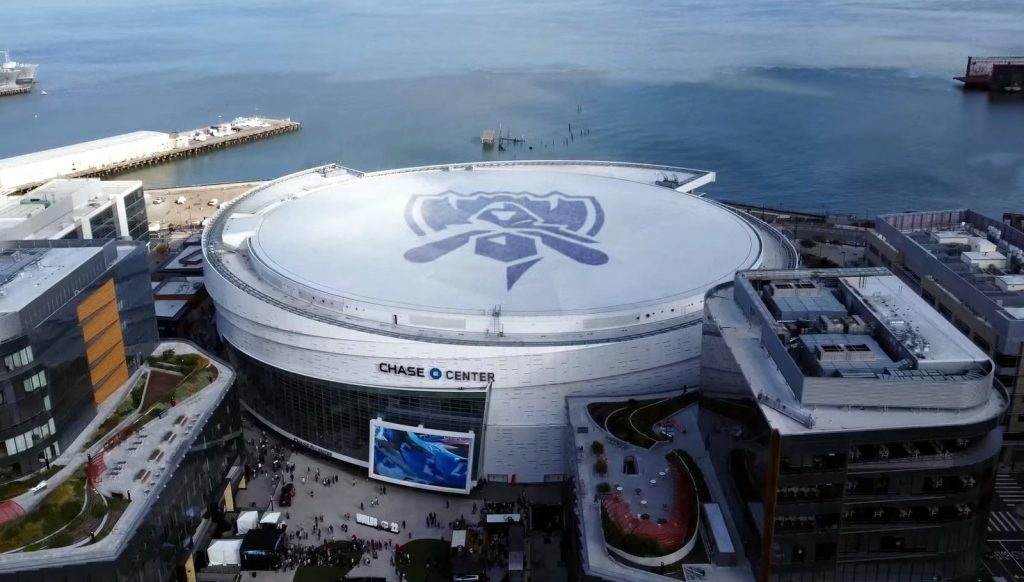
Riot has also signaled bigger ambitions. In December 2025 the company publicly outlined plans for the game after 2026, including a new client, improved onboarding and updated visuals. Details of those plans are still developing, so it is too early to say how much they will change the game.
What Has Stayed the Same
For all the changes, a match of League today would be recognizable to a player from 2009. Two teams of five still fight across three lanes on Summoner’s Rift. Champions still level from 1 to 18, buy items and use four abilities and two summoner spells. Turrets, inhibitors and the Nexus still define the win condition. The core design Riot established at launch, a more streamlined take on DotA built for free-to-play, has proved durable enough that the studio has spent more than fifteen years refining it rather than replacing it.
That combination of stable foundations and constant iteration is the real story of League’s history. The game has never been finished, and that is exactly why it is still being played.