How Dota Auto Chess Started the Auto Battler Boom
The story of Dota Auto Chess, the 2019 Dota 2 custom game by Drodo Studio that inspired Teamfight Tactics, Dota Underlords and a whole new genre.
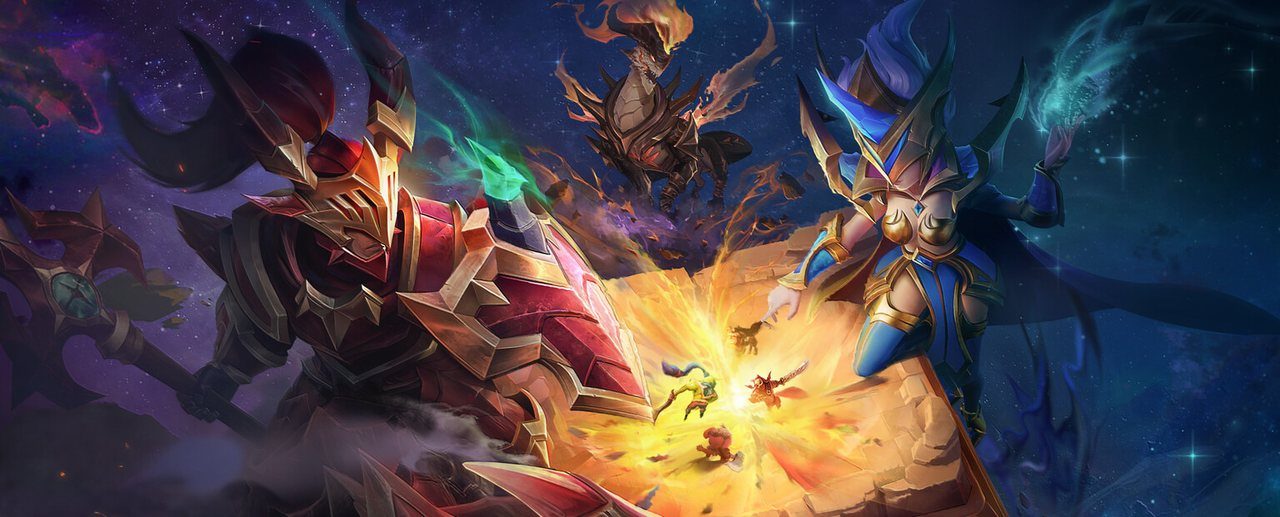
In January 2019, a small custom game appeared in the Dota 2 Arcade. It had no marketing, no standalone client and no company behind it beyond a little-known Chinese team. Within months it had millions of players, a queue of imitators and the attention of two of the biggest companies in PC gaming. By the end of that year, an entirely new genre existed, and it had a name: the auto battler.
This is the story of Dota Auto Chess, how it worked, why it caught on so quickly, and how it led to Teamfight Tactics, Dota Underlords and the standalone Auto Chess, all within a single year. If you want a primer on how the genre plays before diving into its history, our explainer on what an auto battler is covers the basics.
A Mod Inside a Game That Started as a Mod
Dota Auto Chess was built using the custom game tools Valve added to Dota 2 with the Source 2 “Reborn” update in 2015. Those tools let anyone make their own game modes inside Dota 2 and publish them to the Arcade, a browser of community-made games. The irony was not lost on players: Dota itself had begun as a custom map inside Warcraft III, as we describe in our history of Dota.
The creators were Drodo Studio, a Chinese team. They released Dota Auto Chess on January 4, 2019. The developers have said the game took inspiration from the Chinese tile game Mahjong, where players draw from a shared pool, look for matching sets and decide what to keep and what to discard.
The genre’s roots also go back further. Tower defense and wave-based custom maps for Warcraft III, such as Legion TD, had already explored the idea of placing units and watching them fight automatically. Dota Auto Chess combined that with ideas from card games and Dota’s own heroes in a way that clicked with a much larger audience.
How Dota Auto Chess Worked
The basic rules of Dota Auto Chess are recognizable in every auto battler that followed:
- Eight players joined a lobby, each with their own board, and each started with a pool of health.
- Each round, players bought Dota heroes as “chess pieces” from a small random shop, drawing from a pool shared by all eight players.
- Three copies of the same piece combined into a stronger, upgraded version, and three of those combined into a still stronger one.
- Pieces belonged to races and classes. Fielding several pieces with the same race or class activated a synergy bonus.
- After a preparation phase, the board fought automatically against another player’s board. Players had no direct control during combat.
- Losing a round cost health. The last player standing won, but finishing in the top half was still a respectable result.
- An economy of gold, interest and win or loss streaks rewarded careful planning.
The genius of the design was that the hard decisions all happened before the fight. Players had to decide which pieces to buy, which synergies to chase, whether to spend gold or save it for interest and where to place each unit. Because everyone drew from the same pool, they also had to watch what their opponents were collecting. It was a game of planning and adaptation rather than mechanical skill, which opened it to people who had never enjoyed the reflex-heavy side of Dota.
A Sudden Explosion of Players
Dota Auto Chess spread extraordinarily fast. Streamers picked it up within weeks, and players who had not opened Dota 2 in years reinstalled it just to play the custom game. By late April 2019 the game had passed 8 million players, and by May it had over 8.5 million subscribers in the Arcade with more than 300,000 daily active players, according to figures reported at the time.
Those numbers were remarkable for any custom game, let alone one built by a small team. They also drew attention to a problem: the custom game platform had limits, from server capacity to monetization, and the studio was suddenly running one of the most popular games on Steam inside someone else’s product.
Valve, Drodo and Two Different Paths
Valve noticed. The company flew members of Drodo Studio to its headquarters to discuss working together. According to accounts of those talks, the two sides concluded that they could not work together directly, but they agreed to make their own standalone versions and to support each other. That decision split the genre’s future into separate projects.
Drodo’s Auto Chess
Drodo partnered with publisher Dragonest to make a standalone game simply called Auto Chess. It used original characters instead of Dota heroes, since Drodo did not own Valve’s intellectual property. The release timeline was quick:
| Platform | Release |
|---|---|
| Android | April 18, 2019 |
| iOS | May 22, 2019 |
| Windows (Epic Games Store) | July 19, 2019 |
| PlayStation 4 | December 16, 2020 |
Drodo also said it would keep updating the original Dota Auto Chess custom game alongside the standalone version.
Valve’s Dota Underlords
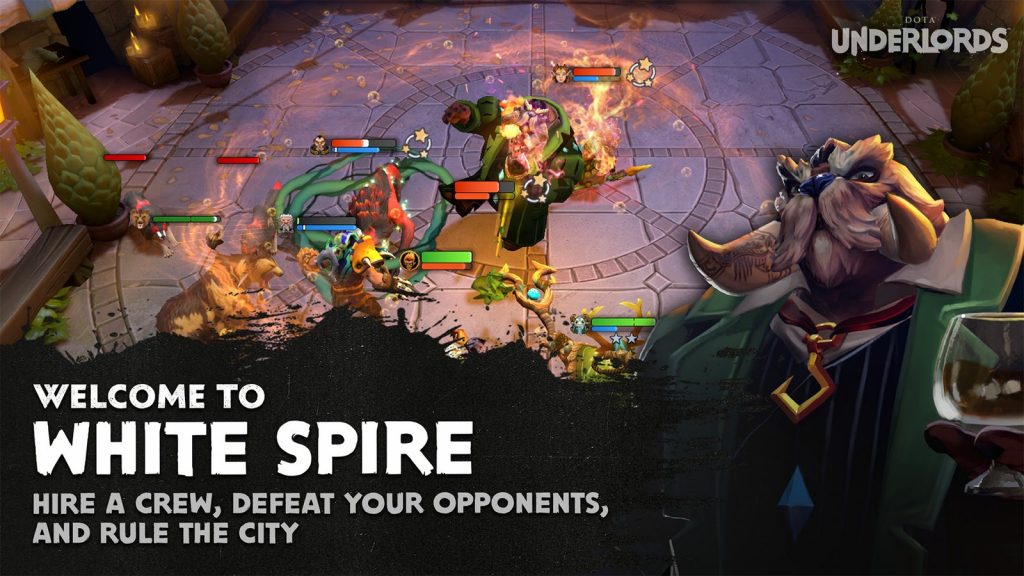
Valve announced its own game, Dota Underlords, in May 2019. It entered open beta and early access on June 20, 2019, as a free-to-play title on PC and mobile with cross-platform play. Underlords kept Dota’s heroes and setting but rebuilt the interface and systems with a strong focus on clarity for new players. It reached more than 200,000 concurrent players on Steam within days of the beta launch and left early access on February 25, 2020.
Riot Enters With Teamfight Tactics
The third major project came from Riot Games. In June 2019 Riot announced Teamfight Tactics, an auto battler built into the League of Legends client using League’s champions. It launched on June 26, 2019 for Windows and macOS, only days after Underlords entered early access.
TFT had an enormous advantage: it was available instantly to everyone who already played League of Legends. By September 2019, it had more than 33 million monthly players. A standalone mobile version followed on March 19, 2020, with cross-play between PC and mobile. Our guide to how Teamfight Tactics works explains its rules in detail.
TFT also introduced the structure that would define its long-term success: sets. Rather than patching one permanent roster, Riot replaces most of the champions, traits and mechanics every few months with a new themed set, keeping the game fresh in a way that a single fixed design could not.
Summer 2019: Three Games at Once
For a short period in mid-2019, players could choose between the original Dota Auto Chess, Drodo’s standalone Auto Chess, Valve’s Underlords and Riot’s TFT, all based on nearly the same rules. Gaming media coverage at the time often framed it as a race to see which version would become the definitive auto battler.
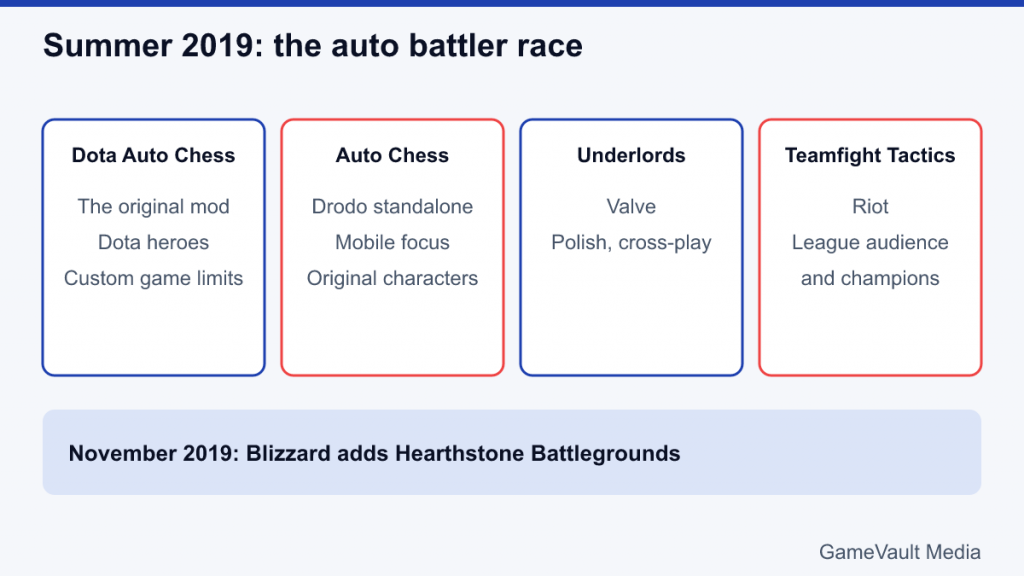
Each had a different pitch:
- Dota Auto Chess was the original, with its established community and Dota heroes, but it was limited by the custom game platform.
- Auto Chess focused on mobile and new original characters.
- Underlords offered polish, cross-play and Valve’s support.
- Teamfight Tactics had the built-in audience of League of Legends and the familiar champions.
Blizzard joined the trend later that year, adding a mode called Battlegrounds to Hearthstone in November 2019. It borrowed the eight-player, shared-pool format but used Hearthstone’s card-based minions instead of chess pieces.
What Happened Next
The boom did not last at the same intensity. After the initial excitement, player numbers settled, and the genre consolidated around fewer games.
Teamfight Tactics became the standard-bearer
TFT’s regular set rotation proved to be a durable model, and it remains the most prominent auto battler as of 2026, with new sets still released several times a year.
Underlords went quiet
Dota Underlords received its large Season One update, including the City Crawl campaign, at its full release in 2020. After that, major content updates stopped; contemporary reports put the last content update in August 2020. As of 2026 the game remains free to play on Steam, but it has not received new seasons in years.
Auto Chess continued in its own niche
Drodo’s standalone Auto Chess continued on mobile, PC and later PlayStation 4, but it never matched the mainstream visibility of TFT.
The genre spread out
The mechanics themselves proved enormously influential. Independent developers built new takes on the formula, such as Super Auto Pets, Storybook Brawl, Backpack Battles and The Bazaar, each changing the board, the shop or the theme. Even large mobile games adopted the idea: in July 2025, Clash Royale made its auto battler-style Merge Tactics mode permanent.
Why Dota Auto Chess Mattered
Looking back, Dota Auto Chess mattered for three reasons.
- It proved the appeal of strategy without reflexes. Many players liked the heroes and theme of MOBAs but not the mechanical intensity. Auto battlers gave them a way to engage with those worlds through planning instead.
- It showed the power of modding once again. Just as Defense of the Ancients had created the MOBA genre from a custom map, Dota Auto Chess created another genre from a custom game.
- It set the template. The shared pool, three-copy upgrades, synergies, economy with interest and streaks, and eight-player free-for-all format remain the foundation of almost every auto battler made since.
Frequently Asked Questions
Who made Dota Auto Chess?
Drodo Studio, a Chinese team, created it as a Dota 2 custom game and released it on January 4, 2019. Valve did not make it; Valve’s own auto battler is Dota Underlords.
Was Teamfight Tactics the first auto battler?
No. TFT launched in June 2019, about six months after Dota Auto Chess, and it openly built on the format that Dota Auto Chess had popularized.
Can you still play Dota Underlords?
Yes. As of 2026 it is still listed as free to play on Steam, with Standard, Knockout and Duos modes, although it has not received major new content for years.