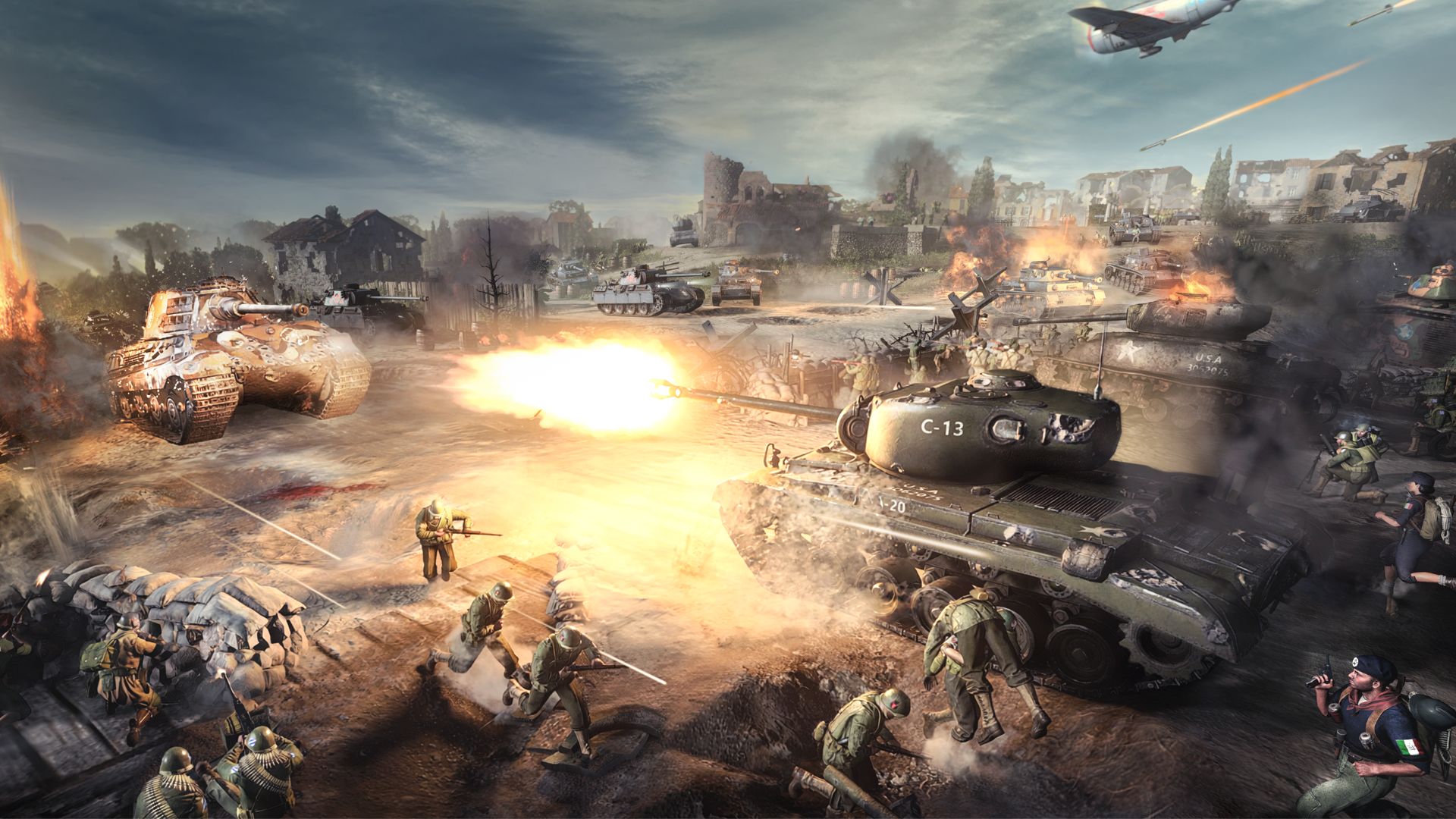
An RTS game that combines wave defense mechanics with roguelike elements represents such a precisely targeted gaming concept that it feels almost eerily personalized for strategy enthusiasts. Company of Heroes 3: Final Stand arrives as the latest expansion to Relic Entertainment’s acclaimed World War II real-time strategy franchise, offering something genuinely novel in a genre that often struggles to innovate. This bite-sized tactical experience promises quick sessions infused with elements of chance, creating an addictive loop that threatens to consume hours of gameplay in what was supposed to be brief intervals.
The Company of Heroes franchise has long been celebrated for its authentic portrayal of World War II combat, emphasizing tactical positioning, cover mechanics, and resource management over the base-building focus of traditional RTS games. Since the original title launched in 2006, the series has garnered critical acclaim and a devoted fanbase who appreciate its more grounded approach to real-time strategy warfare. Company of Heroes 3, released in 2023, expanded the franchise to new theaters of war including the Mediterranean and North Africa, introducing dynamic campaign maps and improved graphics while maintaining the core gameplay that fans loved.
Wave Defense Meets Strategic Depth
Final Stand takes the established Company of Heroes formula and distills it into focused wave defense scenarios that feel both familiar and refreshingly different. Players must hold positions against increasingly difficult enemy assaults, making critical decisions about unit placement, resource allocation, and tactical priorities with each passing wave. The roguelike elements introduce meaningful variety to each playthrough, with randomized upgrades, unit availability, and enemy compositions ensuring that no two sessions feel identical. This approach addresses one of the primary criticisms of traditional wave defense modes: the tendency toward repetitive gameplay patterns that become stale after extended sessions.
The strategic depth on offer here rivals that of the main campaign experience, despite the more condensed format. Players must balance aggressive positioning to maximize damage output against the need for sustainable defensive lines that can weather multiple assault phases. Unit veterancy becomes particularly crucial, as experienced squads that survive early waves become invaluable assets in later, more challenging encounters. The pressure to preserve these hardened units while still maintaining offensive capability creates compelling moment-to-moment decisions that keep players engaged throughout each session.
Roguelike Elements Add Replayability
The integration of roguelike mechanics into the Company of Heroes framework represents a surprisingly natural fit. Between waves, players are presented with choices regarding reinforcements, upgrades, and special abilities that shape their tactical options for subsequent encounters. These decisions carry weight because they cannot be undone, and a poor choice early in a run can create cascading problems that doom an otherwise promising defense. The randomization ensures that players cannot simply memorize optimal strategies, instead requiring adaptive thinking and flexibility in their tactical approach.
This design philosophy echoes successful roguelike implementations in other genres, drawing inspiration from titles like Slay the Spire, Hades, and Into the Breach. The key to making such systems work lies in ensuring that randomness enhances rather than undermines player agency, and Final Stand largely succeeds in this balancing act. While some runs will inevitably prove more favorable than others due to upgrade availability, skilled players can consistently achieve success across varied conditions. The progression systems that persist between runs provide meaningful long-term goals that encourage continued engagement even after individual failures.
Production Values and Historical Authenticity
Final Stand maintains the high production values that have characterized the Company of Heroes series throughout its history. The visual presentation captures the gritty reality of World War II combat with impressive attention to historical detail in unit designs, equipment, and environmental elements. Sound design remains exceptional, with weapons fire, explosions, and soldier voice acting contributing to an immersive battlefield atmosphere. The expansion leverages the technical improvements introduced in Company of Heroes 3, including enhanced destruction physics and improved animation systems that make combat feel visceral and impactful.
For fans of the franchise seeking a more accessible entry point into the Company of Heroes experience, Final Stand offers an excellent introduction to the series’ core mechanics without the commitment required by longer campaign modes. Conversely, veteran players will find sufficient depth and challenge to justify the expansion’s price point, particularly given the strong replay value inherent in the roguelike structure. Whether as a complement to the main game or a standalone experience, Final Stand represents a creative evolution for the franchise that successfully blends genres in service of compelling strategy gameplay.
Expert Opinion: Final Stand demonstrates that established franchises can still find innovative directions by thoughtfully incorporating mechanics from other genres. The wave defense roguelike hybrid format could inspire similar experiments across the RTS landscape, potentially addressing the genre’s ongoing struggle to attract new players while retaining hardcore enthusiasts. If this expansion performs well commercially, expect other strategy developers to explore similar bite-sized, replayable formats that accommodate modern gaming habits.