
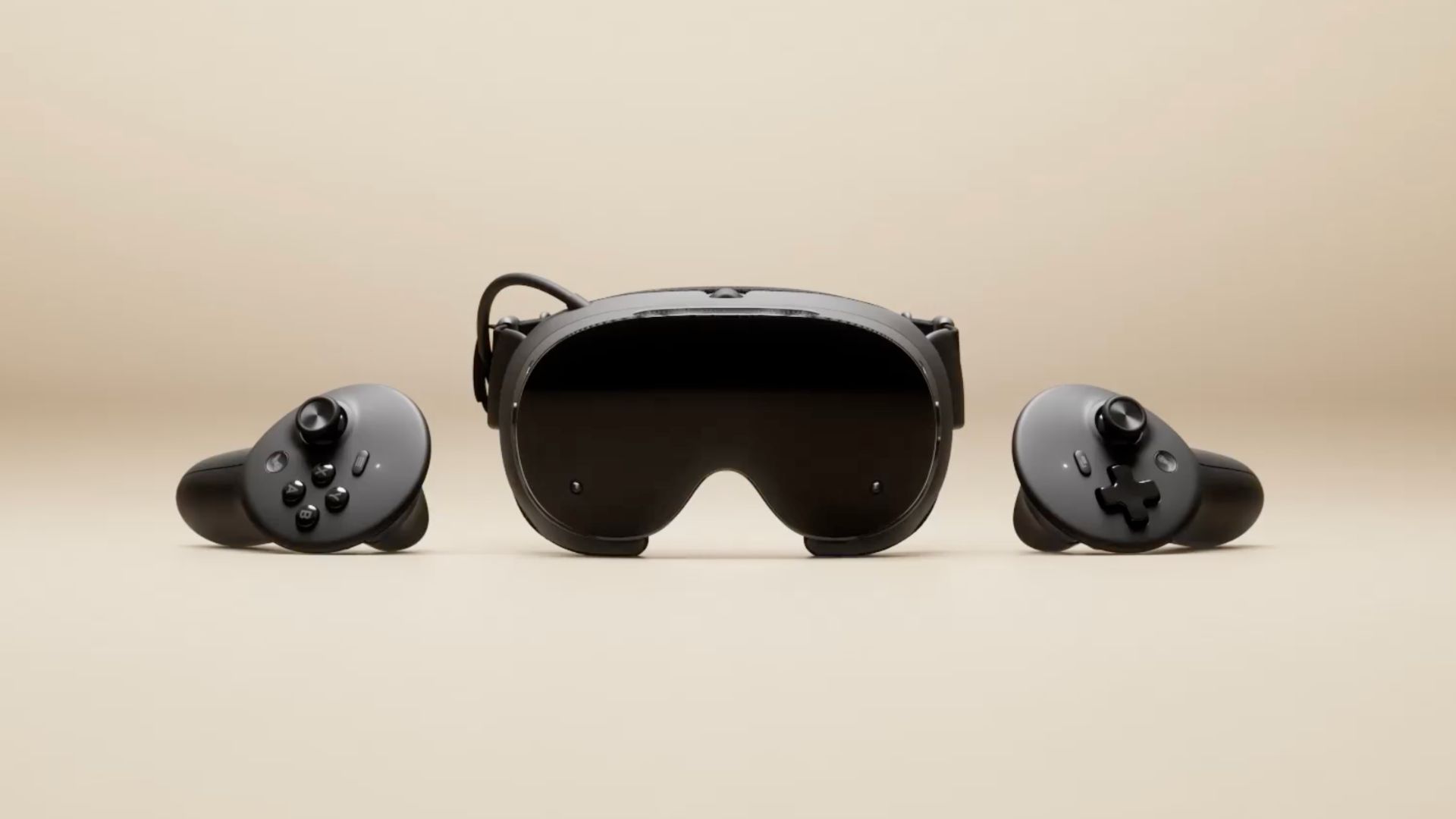
Valve Corporation is preparing to challenge the dominance of Meta’s Quest lineup and Sony’s PlayStation VR2 with its highly anticipated wireless Steam Frame VR headset. According to prominent Valve leaker Tyler McVicker, who shared details in a now-deleted YouTube stream, the upcoming device will carry a starting price tag exceeding $1,000. If accurate, this pricing strategy would position the Steam Frame as one of the most expensive consumer-focused gaming VR headsets currently available, signaling Valve’s intention to target the premium segment of the virtual reality market rather than competing directly on price with more affordable alternatives.
The leaked pricing information has sparked considerable discussion within the gaming and VR enthusiast communities, with many questioning whether mainstream consumers will be willing to invest such a substantial sum in virtual reality hardware. However, Valve has historically demonstrated a willingness to prioritize quality and innovation over mass-market accessibility, as evidenced by the original Valve Index headset launched in 2019, which debuted at $999 for the full kit including controllers and base stations.
Valve’s History in Virtual Reality Hardware
Valve’s journey into virtual reality hardware began with a collaborative effort with HTC that resulted in the original HTC Vive, released in 2016. This partnership helped establish the foundation for modern room-scale VR gaming, introducing concepts like lighthouse tracking that revolutionized how users interact within virtual environments. Following this success, Valve struck out on its own with the Valve Index in 2019, which received widespread acclaim for its exceptional display quality, superior audio system, and innovative “Knuckles” controllers that could track individual finger movements.
The company’s approach to VR has always emphasized pushing technological boundaries rather than cutting corners to achieve lower price points. The original Index featured a 120Hz refresh rate with an experimental 144Hz mode, dual 1440×1600 LCD panels, and off-ear speakers that became the gold standard for VR audio. This commitment to premium experiences suggests that the Steam Frame will likely incorporate cutting-edge technology that justifies its substantial price tag, potentially including advanced display technology, improved tracking systems, and enhanced comfort features for extended gaming sessions.
The Competitive Landscape and Market Positioning
The virtual reality market has evolved significantly since Valve’s last hardware release, with Meta aggressively pursuing market share through its Quest series of standalone headsets. The Meta Quest 3, priced at approximately $500, offers a compelling combination of standalone functionality and PC VR capability through its Link feature, making high-quality VR more accessible than ever before. Meanwhile, Sony’s PlayStation VR2, launched in early 2023 at $550, brought impressive specifications to console gamers but has faced challenges in market adoption despite its competitive pricing and strong exclusive title lineup.
By positioning the Steam Frame above $1,000, Valve appears to be carving out a distinct niche in the market, targeting enthusiasts and serious gamers who prioritize the absolute best VR experience over affordability. This strategy mirrors the company’s approach with the Steam Deck, where premium versions with enhanced storage and features command higher prices while maintaining strong demand among dedicated gaming audiences. The wireless functionality rumored for the Steam Frame represents a significant advancement, potentially eliminating one of the most common complaints about tethered PC VR systems while maintaining the graphical fidelity that standalone headsets cannot match.
What This Means for VR Gaming’s Future
The reported pricing of the Steam Frame raises important questions about the direction of the VR industry and whether premium hardware can coexist alongside more affordable options. Industry analysts have long debated whether virtual reality’s mainstream adoption depends on lower prices or whether superior experiences can justify premium costs for a dedicated audience. Valve’s apparent bet on the latter approach could prove influential, particularly given the company’s unmatched position as the operator of Steam, the world’s largest PC gaming platform with over 130 million active users.
Furthermore, Valve’s extensive software ecosystem and proven track record with titles like Half-Life: Alyx—widely considered one of the greatest VR games ever created—provides a foundation that competitors struggle to match. If Valve commits to developing additional exclusive or highly optimized content for the Steam Frame, the value proposition could extend beyond hardware specifications alone. The combination of premium hardware, seamless Steam integration, and potential software exclusives could create an ecosystem that justifies the higher entry cost for serious VR enthusiasts, potentially accelerating the development of more ambitious VR gaming experiences across the industry.
Expert Opinion: Valve’s decision to price the Steam Frame above $1,000 represents a calculated gamble that prioritizes technological leadership over mass adoption. This strategy could prove transformative if the hardware delivers genuinely next-generation experiences that justify the premium, potentially establishing a new tier in the consumer VR market. However, success will ultimately depend on Valve’s commitment to software support and whether the enthusiast market is large enough to sustain a premium-only approach in an increasingly price-competitive landscape.