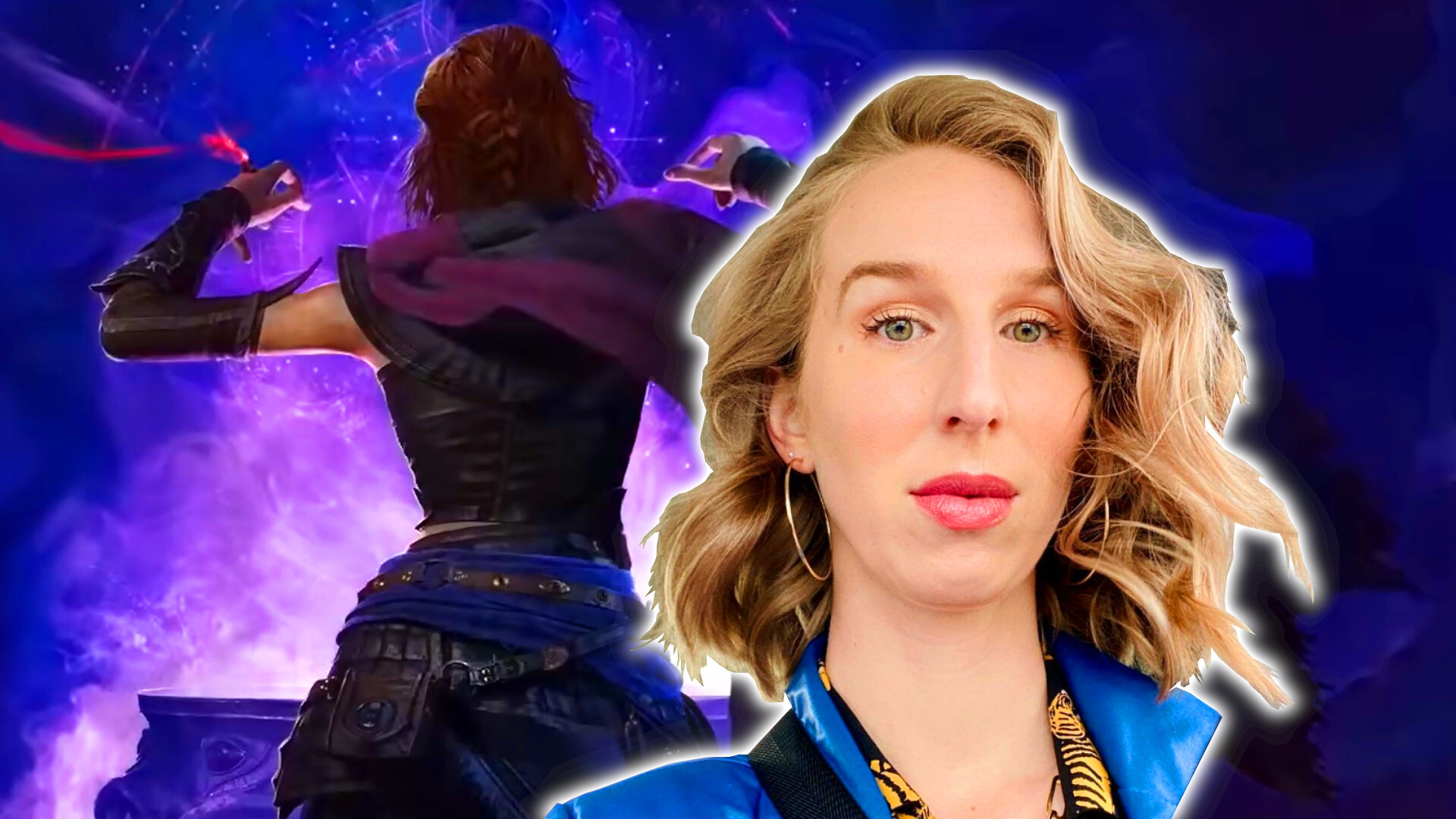
Maggie Robertson has built a remarkable career bringing complex, powerful, and often terrifying women to life in video games. The acclaimed voice actress, best known for her iconic portrayal of Lady Dimitrescu in Resident Evil Village and her work in Baldur’s Gate 3, is continuing her reign as gaming’s queen of the monstrous feminine with a newly announced starring role in Warlock, an upcoming Dungeons & Dragons action-adventure game from Invoke Studios. In this ambitious new project, Robertson will voice Tasha, a powerful and dangerous witch whose name carries significant weight in tabletop gaming circles.
For those unfamiliar with D&D lore, Tasha is far more than just another spellcaster. She is one of the most influential figures in the game’s extensive mythology, originally introduced as Iggwilv the Witch Queen in early D&D modules from the 1980s. Known for her mastery of demonic magic and her complex moral alignment, Tasha has been both villain and antihero throughout decades of tabletop adventures. Her name became permanently etched in gaming history with the publication of “Tasha’s Cauldron of Everything” in 2020, a major rulebook that expanded character customization options for players worldwide. Robertson stepping into this legendary role represents a significant moment for fans who have followed the character across multiple editions of the game.
From Lady Dimitrescu to the Witch Queen
Robertson’s journey to becoming one of gaming’s most sought-after voice talents began with her theatrical background. Trained in classical performance, she has frequently spoken about how her experience with Shakespeare and stage acting has informed her approach to video game characters. In recent interviews surrounding the Warlock announcement, Robertson emphasized that Shakespeare’s works provide excellent preparation for game voice acting, noting that the heightened emotions, larger-than-life characters, and dramatic stakes found in classical theater translate remarkably well to interactive entertainment. The technical demands of projecting emotion through voice alone, combined with the need to convey complex character arcs in fragmented recording sessions, make theatrical training invaluable for the medium.
Her breakthrough role as Lady Dimitrescu in Resident Evil Village demonstrated this perfectly. The towering vampire aristocrat became an instant cultural phenomenon upon her reveal in 2020, with Robertson’s sophisticated yet menacing performance contributing significantly to the character’s appeal. Standing at a canonical nine feet six inches tall, Lady Dimitrescu combined elegance, horror, and dark humor in ways that captivated audiences months before the game’s release. Robertson’s ability to balance genuine threat with theatrical grandeur showcased exactly why her background serves her so well in these roles.
The Appeal of Complex Female Villains
The gaming industry has witnessed a notable shift in how it portrays female antagonists and morally ambiguous characters over the past decade. Where once women in games were frequently relegated to supporting roles or one-dimensional villains, contemporary titles increasingly feature nuanced female characters who defy simple categorization. Robertson has been at the forefront of this evolution, consistently gravitating toward roles that challenge traditional representations. Her characters are powerful without being diminished, threatening without being cartoonish, and complex without being incomprehensible. This approach to the “monstrous feminine” — a term from feminist film theory describing powerful female figures who transgress societal norms — has resonated deeply with players seeking more sophisticated storytelling.
The casting of Robertson as Tasha in Warlock suggests that Invoke Studios understands what makes these characters compelling. Dungeons & Dragons has always featured powerful female figures, from the goddess Lolth to the archlich Vecna’s various rivals, but video game adaptations have not always captured this diversity effectively. With the recent success of Baldur’s Gate 3, which won numerous Game of the Year awards and demonstrated massive audience appetite for faithful D&D adaptations, the pressure is on for Warlock to deliver similarly compelling characterization. Robertson’s involvement signals serious intent regarding narrative quality.
What Warlock Promises for D&D Fans
Details about Warlock remain relatively scarce, but the game promises to deliver an action-adventure experience rooted deeply in D&D mythology. The involvement of a character as established as Tasha suggests the narrative will engage with the broader lore of the Forgotten Realms and beyond. For Robertson, the role represents another opportunity to explore the intersection of power, femininity, and moral complexity that has defined her most memorable performances. As video games continue maturing as a storytelling medium, actors like Robertson are proving essential to elevating the art form, bringing theatrical expertise and genuine craft to digital characters that resonate with millions of players worldwide.
Expert Opinion: Robertson’s consistent casting in these powerful roles reflects a broader industry recognition that voice acting talent with classical training can elevate video game narratives to new heights. As studios increasingly compete for prestigious voice talent, we can expect to see more theatrical actors following Robertson’s path into gaming, ultimately benefiting players through richer, more emotionally complex storytelling experiences.